Loading...

Share

Copied!

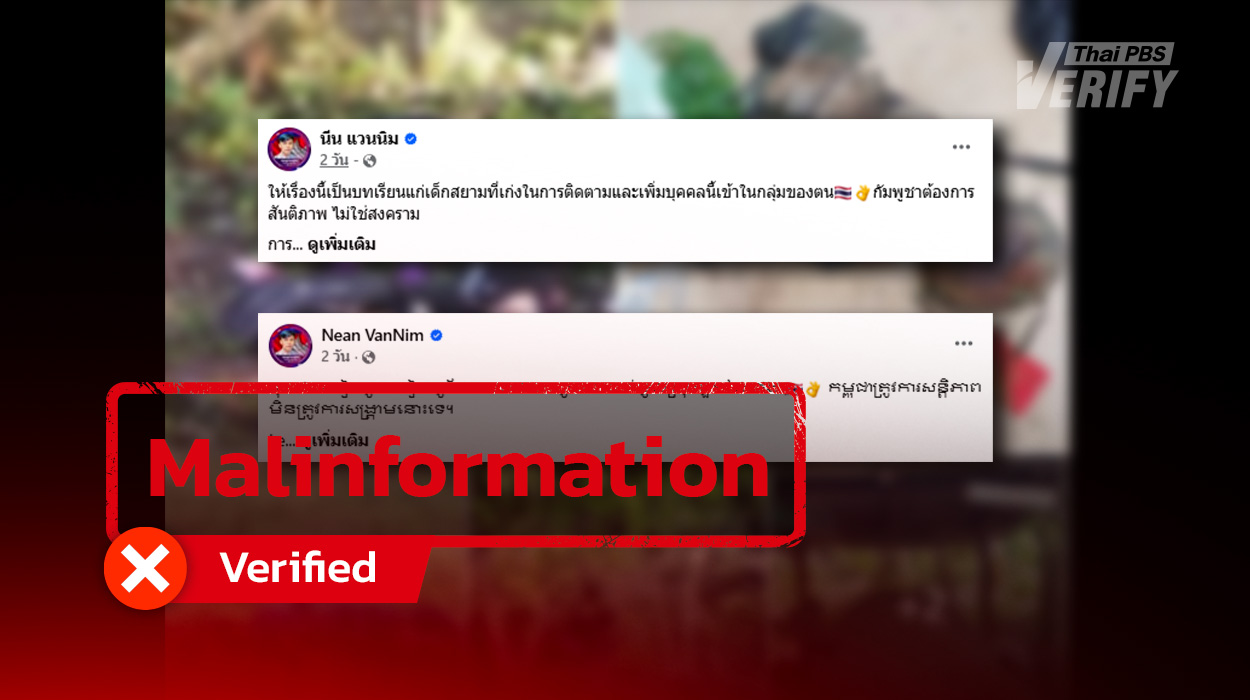
A Cambodian man posted an image claiming to show the “body of a Thai soldier,” but verification shows it is an old photo from the 2013 attack on a Marine Corps base in Narathiwat — unrelated to the current Thailand–Cambodia situation.

Nov 17, 2025 | 13:46 Dec 1, 2025 | 14:19
Catagory#Disinformation
A Cambodian man posted an image claiming to show the “body of a Thai soldier,” but verification shows it is an old photo from the 2013 attack on a Marine Corps base in Narathiwat — unrelated to the current Thailand–Cambodia situation.

Thai PBS Verify examined a post by a Cambodian user claiming to show a dead Thai soldier. The post drew thousands of comments and was shared more than 200 times. However, the image was found to be from a 2013 insurgent attack in Narathiwat Province and is unrelated to the Thailand–Cambodia situation.

Thai PBS Verify found the source of the information from: Facebook
ภาพปลอม

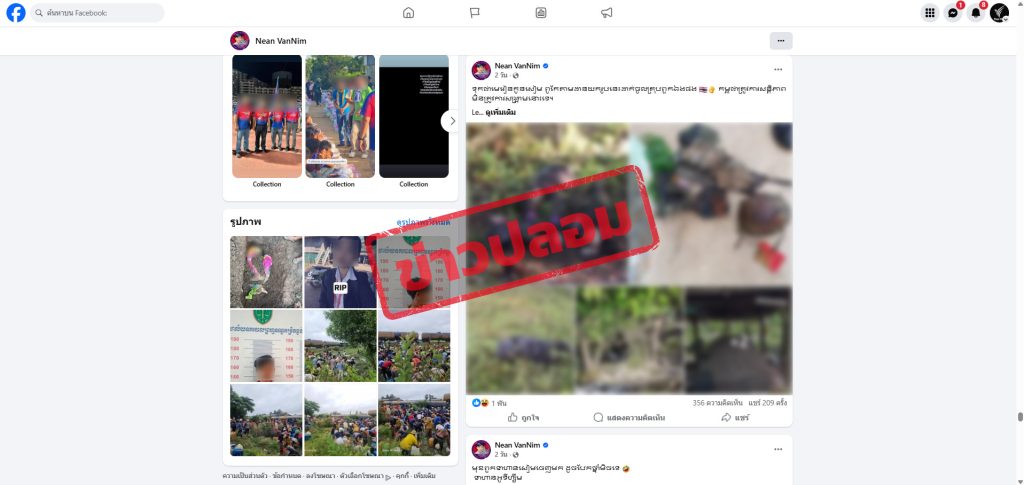
A screenshot showing the post claiming to show the body of a Thai soldier.

Thai PBS Verify examined a Facebook page named “Nean VanNim” posted the image along with a caption.

“ទុកជាមេរៀនកូនសៀម ពូកែតាមដានយករូបនេះដាក់ចូលគ្រុបពួកឯងផង 🇹🇭👌 កម្ពុជាត្រូវការសន្តិភាពមិនត្រូវការសង្គ្រាមនោះទេ។

Let this be a lesson to the Siamese children who are good at following this person and adding him to their group 🇹🇭👌 Cambodia needs peace, not
Don’t thai to me”

Translated to:

“Let this be a lesson to the Siamese youth who excel at tracking and add this person to your group. 🇹🇭👌 Cambodia wants peace, not war.”

“Let this be a lesson to the Siamese children who are good at following this person and adding him to their group 🇹🇭👌 Cambodia needs peace, not..

Don’t [be] Thai to me.”

The post contained images showing the body of a deceased person in camouflage, along with photos of body armor and another deceased individual in military uniform. It was published on 15 November 2025, and after being posted, it drew more than 1,000 reactions and was shared over 200 times.

Is it the body of a Thai soldier?

Using Google Lens for image verification, we found that the photo of the deceased person in camouflage matches news reports from the 2013 incident in which 17 insurgents, including key leaders, were killed during an attempted attack on a Marine Corps base in Bacho District, Narathiwat. It is not the body of a Thai soldier. (Click to view the archived original content)
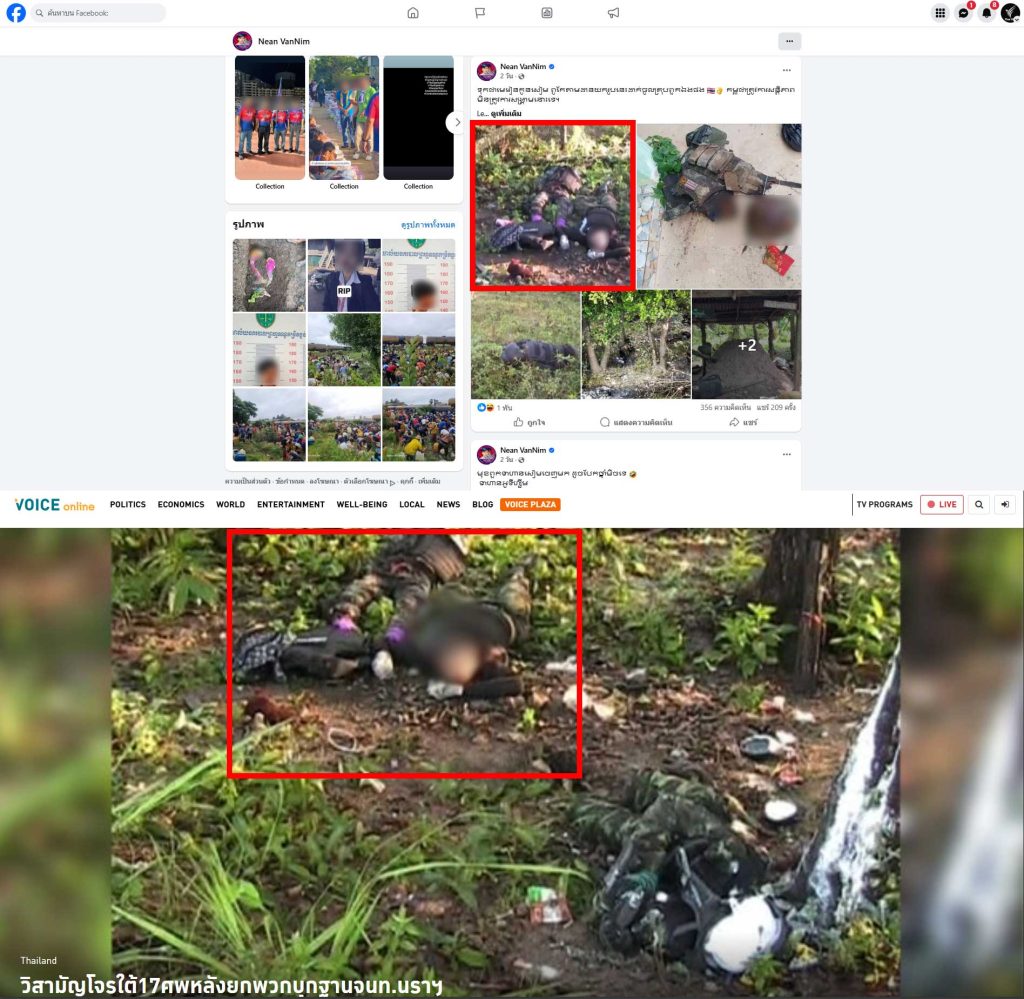
เปรียบเทียบภาพปลอมกับข่าวจริง

A screenshot shows the false post (top) compared with news photos from the 2013 fatal clash involving insurgents who attacked a Marine Corps base (bottom).

Meanwhile, a Google Lens search of the other image showing a deceased person in the post matches an article titled “the three southern border province reflects—media bias, disturbing images on social media used to distort the truth” published on 2 March 2013 by the Thai Civil Rights and Investigative Journalism Center (TCIJ). (Click to view the archived original content)
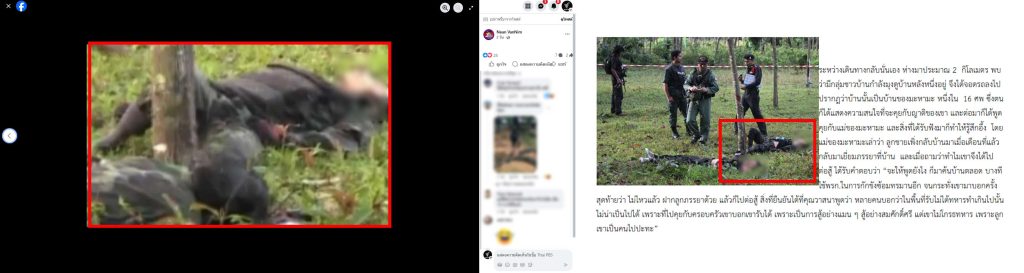
ภาพเปรียบเทียบภาพจริงกับภาพปลอม

A screenshot shows the false post (left) compared with an image from a TCIJ article published on 2 March 2013 (right).

What is the truth?

The Facebook post claimed the images showed “the body of a Thai soldier” and included provocative remarks about Thailand–Cambodia relations. However, verification shows the images are not of Thai soldiers.

The photo of the person in camouflage, claimed to be a Thai soldier, was matched by Google Lens to images from the 2013 incident in which 17 insurgents were killed during an attempted attack on a Marine Corps base in Bacho District, Narathiwat. The other image was traced to a 2013 TCIJ article discussing the misuse of photos of deceased individuals on social media.

None of the images have any connection to the current Thailand–Cambodia border situation.

Verification Process

1. Used Google Lens to verify the first image

  • The result matched a 2013 news photo from the insurgent attack on a Marine Corps base, where the attackers were shot dead.
  • This confirms the person in the image was not a Thai soldier, but an insurgent.

2. Used Google Lens to verify the second image

  • The result matched an image from a TCIJ article published in 2013.
  • The article discussed how photos of deceased individuals were taken out of context and misused on social media, causing public misunderstanding.

3. Checked the timing and context of the images

  • Both images are from events that occurred more than 12 years ago.
  • There is no evidence linking them to the current Thailand–Cambodia situation.

Impacts of this type of false information

1. Fueling hostility between countries

  • Claiming the image shows “the body of a Thai soldier” can create misunderstandings between Thai and Cambodian communities.
  • With the post shared more than 200 times, it further amplifies provocation.

2. Distorting historical and security contexts

  • Images from the southern insurgency were taken out of context.
  • This misleads viewers about Thailand’s current security situation.

3. Spreading widespread misunderstanding

  • People may believe there is armed conflict or violence between the two countries, even though it is not true.

4. Undermining trust in real information on social media

  • As fake content spreads, the public may grow confused and begin to doubt reliable news sources.

Recommended Response

1. Do a reverse image search

Use tools such as:

Google Lens

2. Check the context of the image (time / location / uniforms)

  • Violent or graphic images are often reused in different contexts.
  • Always look for dates, locations, and details missing from the post.

3. Do not share before verifying

  • This kind of content is often used to stir political emotions or inflame international relations.

4. Cross-check with credible sources

Such as:

  • Mainstream media
  • Government agencies
  • Fact-checking teams

5. Report posts that incite conflict or misuse images of the deceased

On Facebook, you can report them as:

  • Misleading content
  • Violence
  • Hate speech