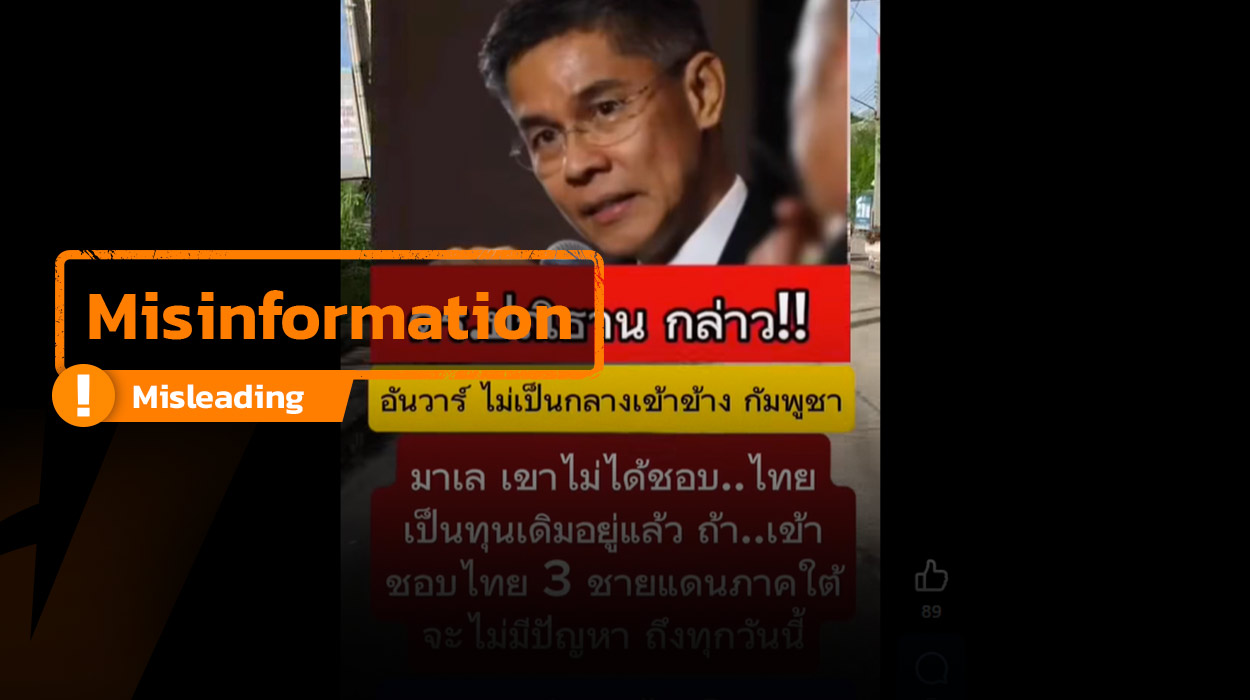
Thai PBS Verify found the news source from: Facebook
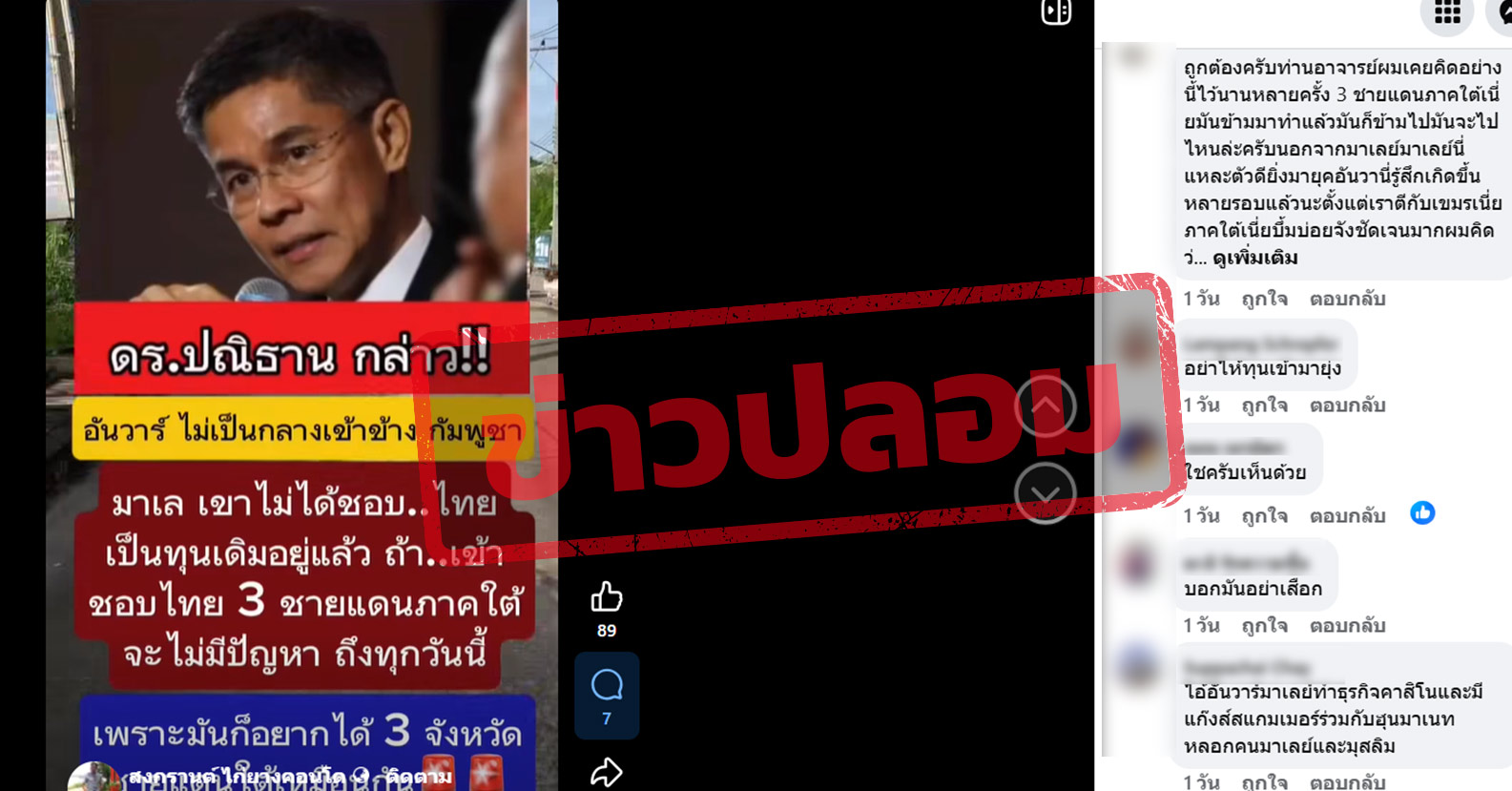
A post falsely claimed that Assoc. Prof. Panitan Wattanayagorn, a security and foreign affairs scholar, stated that Malaysian Prime Minister Anwar Ibrahim is biased in favor of Cambodia and made remarks about Thailand’s three southern border provinces.
The post reads:
“Dr. Panitan said!! Anwar is not neutral—he sides with Cambodia. Malaysia has never really liked Thailand to begin with.
If they did, the three southern border provinces wouldn’t still be a problem today—because they
want those provinces too.”
Is it a genuine quote?
When searching for key phrases such as “Dr. Panitan said Anwar is not neutral, siding with
Cambodia,” a video clip was found in which Dr. Panitan Wattanayagorn gave an interview to Amarin TV, featured on the program “Hot Issues Amarin.”
The headline read: “Dr. Panit an views Anwar as n ot n eut ral — appea ring t o s ide with Cambodia, ”
referring to Malaysia’s role as ASEAN Chair.
The interview was published on September 24, 2025, via YouTube, and in the full context, Dr. Panitan explained:
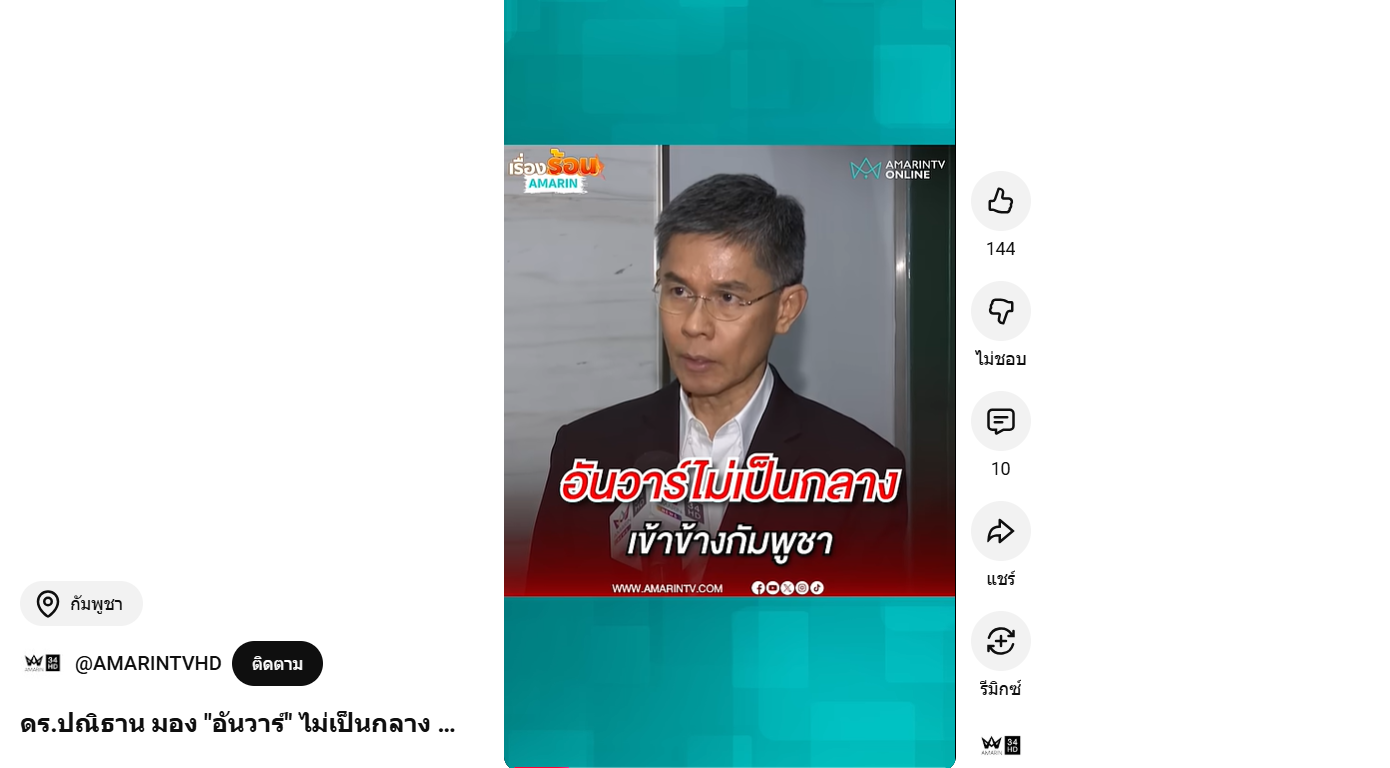
A video clip of Panitan’s interview with Amarin TV, featured on the program “Hot Issues Amarin,” carried the headline: Dr. Panitan views “Anwar” as not neutral—appearing to side with Cambodia, referring to Malaysia’s role as ASEAN Chair. The clip was published on September 24, 2025.
“Yes. There were Malaysian academics themselves—who usually don’t speak out due to strict national security laws—raising concerns that what Prime Minister Anwar is doing, in his role as ASEAN Chair, may not be neutral. He may be influenced by certain forms of information.
This is quite clear. For example, ASEAN observers did enter the area, but when the report came out, it didn’t reflect that the ASEAN Chair viewed the escalation of tensions as coming from Cambodia.
Instead, it seemed to lump Thailand in and suggest that we violated the JBC agreement, which we did not. These points were not reflected in Cambodia’s official statement.
More importantly, Prime Minister Anwar Ibrahim should personally step forward and engage more
directly with Cambodia—both Hun Sen and Hun Manet—as ASEAN Chair. That would help de- escalate the situation.
But not inviting us to travel there, only to cast a wide net and make us look like the guilty party.”
Could the post cause misunderstanding due to distortion or unclear presentation?
Thai PBS Verify interviewed Assoc. Prof. Dr. Panitan Wattanayagorn regarding the claims made in the post to determine whether they were accurate.
He confirmed that while Malaysia’s context was indeed discussed, the quoted statements were not
entirely accurate.
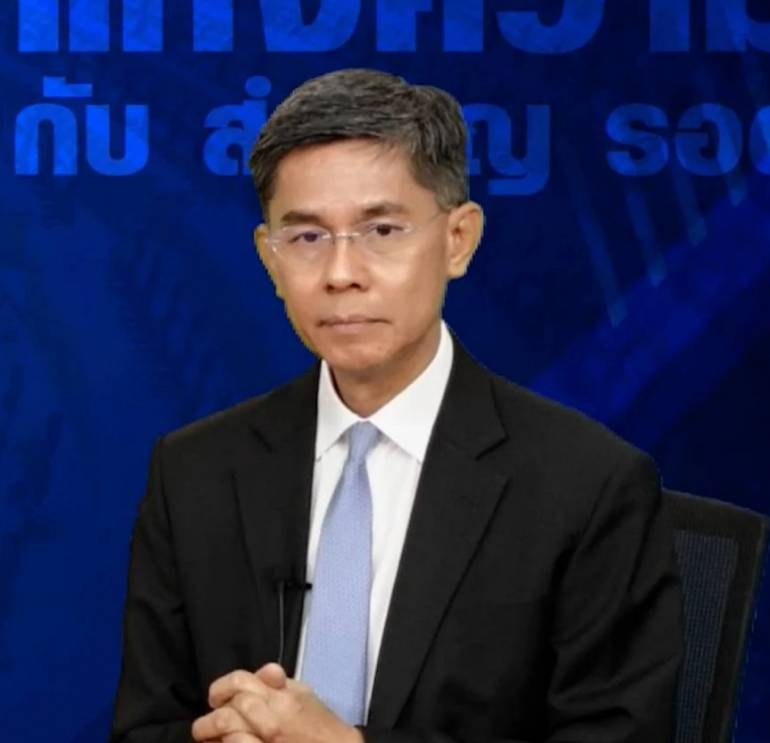
Assoc. Prof. Dr. Panitan Wattanayagorn, a scholar in security and international affairs
stated: “I confirm that I did not use such wording in any of my interviews—whether in Thai or English. Especially in Thai, the issue was clearly framed within Malaysia’s context.
I spoke about several matters that were partially reflected in the post, but not entirely accurate. For example, the case of Malaysian academics—already reported—who noted that Malaysia may be losing its neutrality and being influenced by Cambodia.
This is an observation we take seriously and are interested in, because it’s often cited. We rarely see Malaysian academics publicly challenging their government’s policies, likely due to strict
regulations on criticism and national security laws of this nature.”
“The issue of Thailand’s three southern border provinces is not about like or dislike. It concerns Malaysia’s overlapping interests in the region, which may influence political voting patterns. There are also tensions between opposition and government factions in northern Malaysia and our southern region, which create delays, suspicion, and doubts on Thailand’s part—whether Malaysia has truly honored its commitments to successive Thai governments. When comparing actions to promises, and considering these overlapping interests, recent conclusions suggest that Malaysia’s sincerity may be limited. But that’s not unusual in international affairs. Security politics is not about demanding sincerity from others. This is the point I try to emphasize: politics is about interests, strength, and national power—not sincerity. And it’s not about personal preference, as the fake news claimed. It’s about necessity.”
“When I give interviews to the media, I stay within this framework.
The wording in the fake news post was likely edited and embellished to make it more dramatic and engaging, which led to misrepresentation.
It should be corrected and not cited further.
I believe they listened to this context and then rewrote it.”
“As for political neutrality, I’ve said there’s not much of it—everyone has already taken sides. So it’s not a major issue. But the claim that Malaysia wants the three southern border provinces of Thailand—that is not true.”
What’s the truth?
The post claiming that Assoc. Prof. Dr. Panitan accused the Malaysian Prime Minister of siding with Cambodia and “wanting Thailand’s three southern border provinces” is distorted information. The original clip from Amarin TV only discussed Malaysia’s role as ASEAN Chair and did not contain the harsh language circulated in the post.
Assoc. Prof. Panitan confirmed to Thai PBS Verify that he never used such wording, and that the quoted content had been altered and embellished, resulting in a misrepresentation of the original context.